
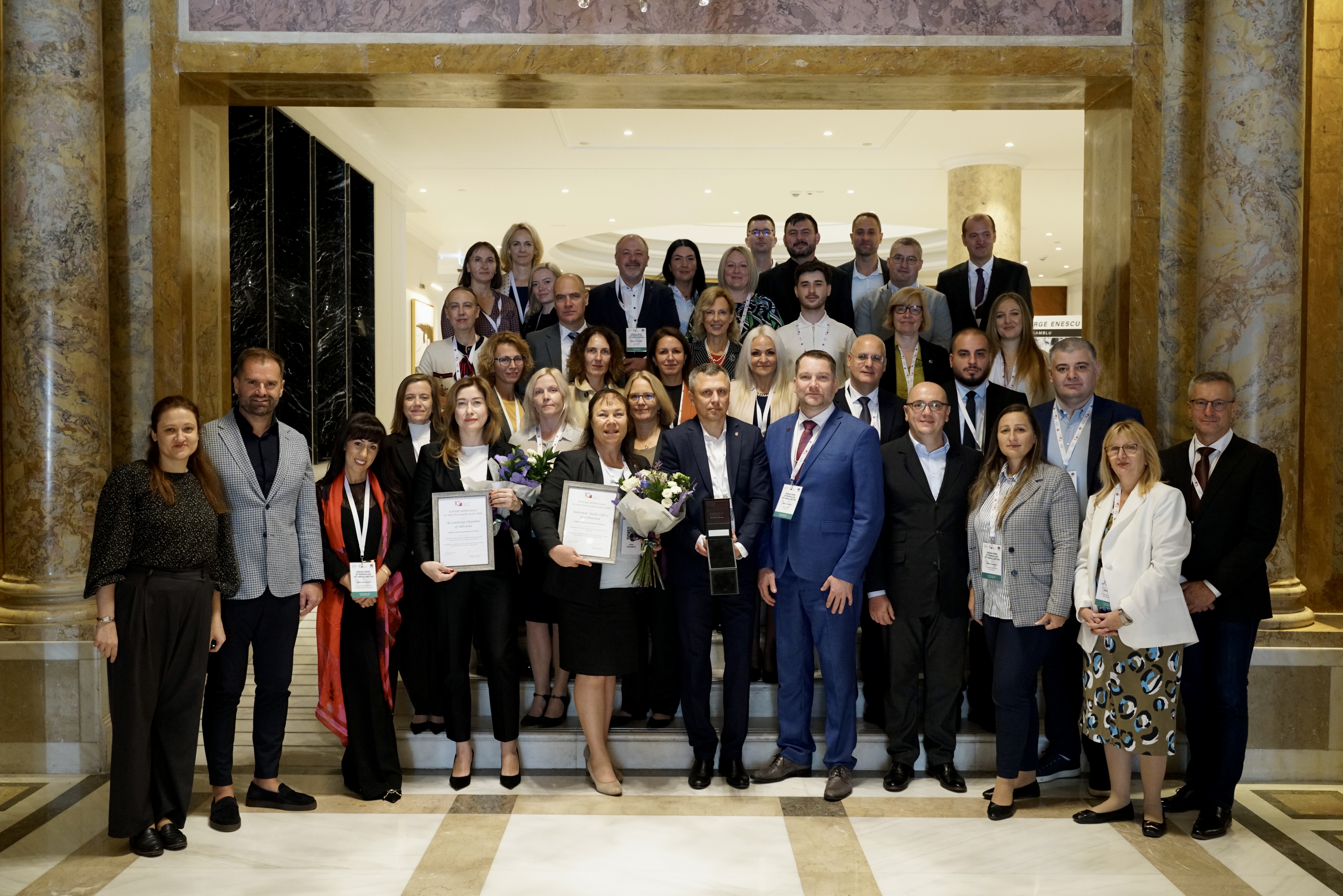
Representatives of the EUROSAI Working Group on Municipality Audit (WGMA) gathered in Bucharest, Romania, on 23–24 September 2026 for the group’s 9th seminar and 10th annual meeting, hosted by the Romanian Court of Accounts in cooperation with the State Audit Office of Latvia. The event brought together representatives of European Supreme Audit Institutions (SAIs) to discuss current challenges in local governance and exchange experience on how audits can contribute to more effective municipal management and better use of public resources. This year’s meeting also marked ten years since the establishment of the WGMA in 2016. The Working Group is chaired by the State Audit Office of Latvia.
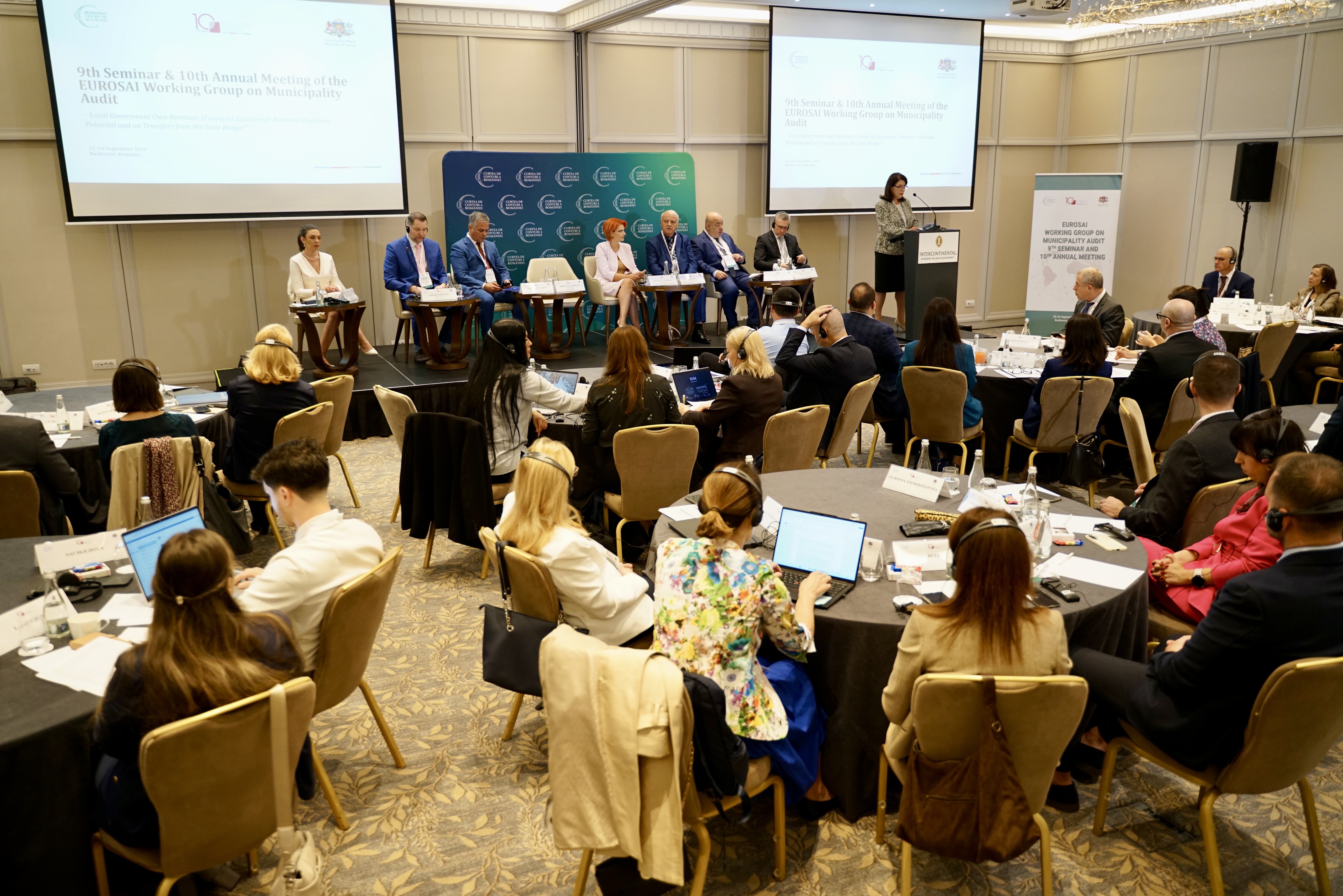
The first day focused on the financial autonomy of local governments and opportunities to strengthen their own-source revenues. The seminar, “Local government own revenues (financial autonomy): Between unutilized potential and dependence on transfers from the state budget”, provided a platform for sharing audit experience and discussing how sustainable local revenue systems can be developed while ensuring effective management of municipal resources.
The seminar was opened by Mirela Călugăreanu, President of the Romanian Court of Accounts, and Oskars Erdmanis, Chair of the EUROSAI WGMA and Member of the Council of the State Audit Office of Latvia. Opening remarks were also delivered by representatives of Romanian national and local authorities and Jaroslav Ivančo, Vice-President of the Supreme Audit Office of the Slovak Republic.
.png)
SAIs of Bulgaria, Estonia, Georgia, Hungary, Israel, Italy, Moldova, Portugal and Romania presented audit findings and shared their national experience. Discussions focused on sustainable local revenue systems, effective management of municipal resources and finding an appropriate balance between local financial autonomy and funding from central government.
Oskars Erdmanis highlighted that audits should assess not only the level of funding available to municipalities and compliance with applicable requirements, but also whether local governments have sufficient capacity and resources to achieve meaningful results for citizens. The role of SAIs is therefore also to assess whether public resources are used efficiently and effectively and contribute to better local governance.
Ten Years of Cooperation in Municipality Audit
At the WGMA annual meeting, members looked back at the Working Group’s key achievements over the past ten years, reviewed activities carried out in 2025 and 2026, and discussed priorities for the WGMA Work Programme for 2027–2029.
Over the past decade, the WGMA has developed into a platform for European SAIs to exchange knowledge and practical experience in municipality audit. This cooperation enables SAIs to learn from approaches used in other countries, improve audit practices and address challenges that are common to local governments across Europe. As Chair and Secretariat of the WGMA, the State Audit Office of Latvia coordinates the Working Group’s activities and cooperation among its members.
The meeting also featured the WGMA Newsletter No. 9, bringing together 19 articles from ten SAIs. The publication reflects on ten years of WGMA activities and achievements and presents municipality audit experience in areas including municipal property management, infrastructure, education, public spaces, accounting reforms and civil protection.
The meeting concluded with the announcement that the Supreme Audit Office of the Slovak Republic will host the next WGMA seminar and annual meeting in 2027.
WGMA Award for Best Municipality Audit
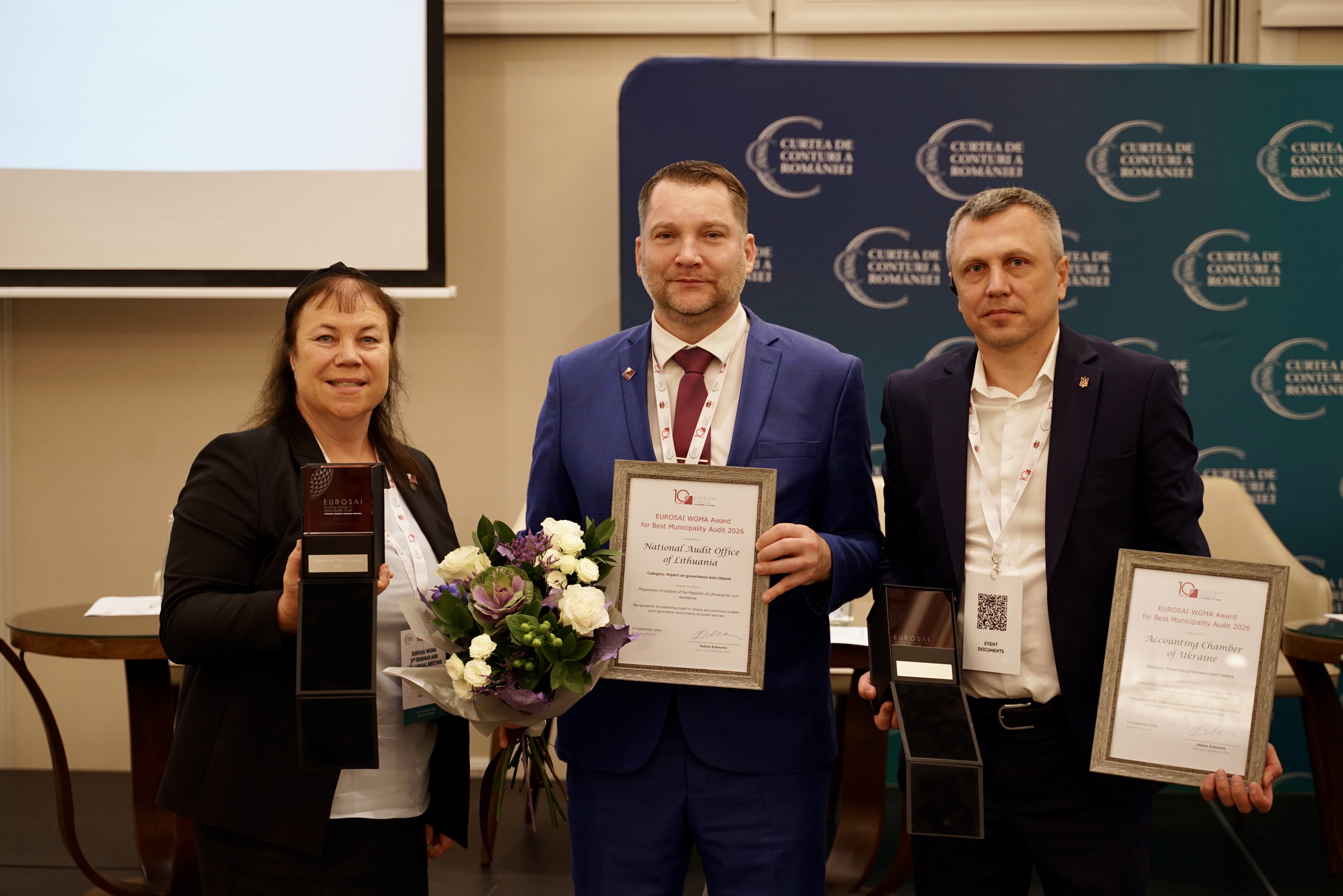
The Working Group’s tenth anniversary also marked the launch of a new initiative – the first WGMA Awards for Best Municipality Audit. The awards were presented to the Accounting Chamber of Ukraine for the audit “Emergency Credit Program: A Path to Restoring Social and Critical Infrastructure of Territorial Communities” and to the National Audit Office of Lithuania for the audit “Preparation of Citizens of the Republic of Lithuania for Civil Resistance”.
The evaluation panel particularly recognised the methodological quality of both audits, their contribution to improving governance and achieving meaningful results for citizens, as well as their potential to provide useful experience for other countries.
.png)
Eight audit entries were submitted for the first awards, covering issues of direct relevance to communities, including infrastructure recovery, cybersecurity, societal resilience, territorial development, environmental governance and municipal financial management.
The WGMA Award was established in 2025 on the initiative of the State Audit Office of Latvia to recognise high-quality and impactful municipality audits and encourage the exchange of good practices across the EUROSAI community. Presenting the first awards during the Working Group’s tenth anniversary meeting also marked a new stage in WGMA cooperation, with a stronger focus on highlighting audits that contribute to tangible improvements in local governance and deliver value for citizens.
About the State Audit Office of Latvia
The State Audit Office of the Republic of Latvia is an independent, collegial supreme audit institution. The purpose of its activity is to find out whether the actions with the financial means and property of a public entity are legal, correct, useful and in line with public interests, as well as to provide recommendations for the elimination of discovered irregularities. The State Audit Office conducts audits in accordance with International Standards of Supreme Audit Institutions of the International Organization of Supreme Audit Institutions INTOSAI (ISSAI), whose recognition in Latvia is determined by the Auditor General. Upon discovering deficiencies, the State Audit Office of Latvia provides recommendations for their elimination, but it informs law enforcement authorities about potential infringements of the law.